
Humanika · A vision of what could be
Bor / Majdanpek ΔΨ Hub
Renewing the ground. Making room for new work.
Bor / Majdanpek ΔΨ Hub connects research into mine water and tailings with living filters, material development and local knowledge. In this vision, renewal also creates the capacity for new work: a laboratory, a nursery, a workshop and people able to carry the work forward.
Explore the vision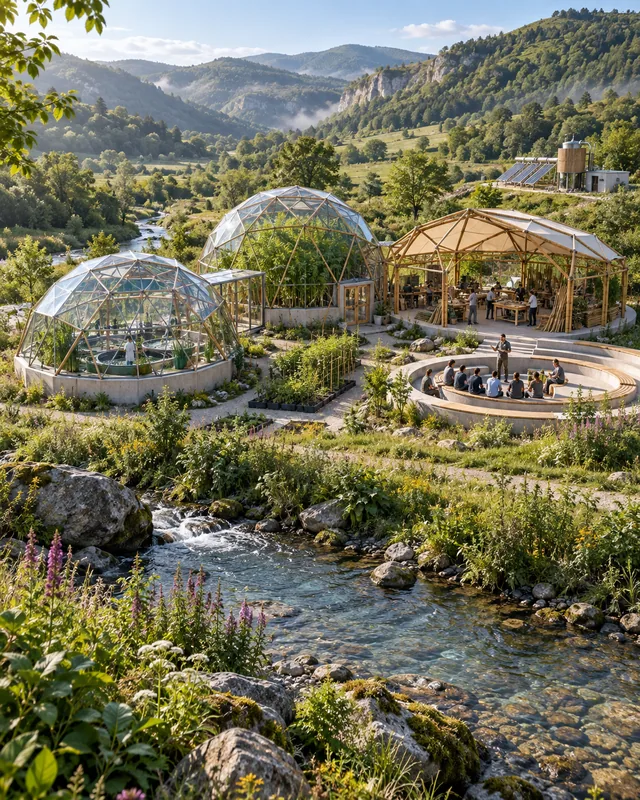
01 / Water and ground
Understand what moves through the landscape
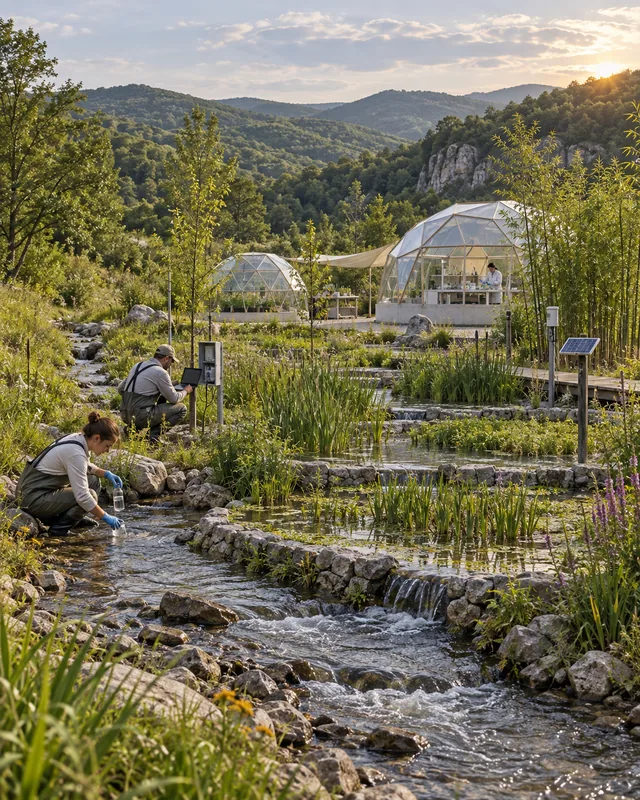
Acid mine water, dissolved metals, tailings and flotation residues call for different questions. A baseline connects water and soil composition with flow paths, seasons and the places where industry, farming and settlements meet. It helps identify sources and where intervention could make the greatest difference.
A small water module would compare source control, neutralisation, precipitation, separation and filtration. Alongside the quality of outgoing water, it tracks inputs and the sludge left behind. Measurement follows the process from the first sample to the final residue.
02 / Biological renewal
Living filters, selected for the place
Fungi, microbial systems, mycorrhiza and pioneer plants can be investigated as parts of renewal. Selection begins with the chemical conditions and the task of each organism. Bounded trial plots allow soil stabilisation, water behaviour and vegetation to be followed over time.
Biomass from a trial retains its provenance. It is harvested, separated and analysed because substances taken up from the ground remain within its balance. Verified clean fractions and contaminated fractions follow different routes.
03 / A material pathway
Bamboo: from nursery to workshop
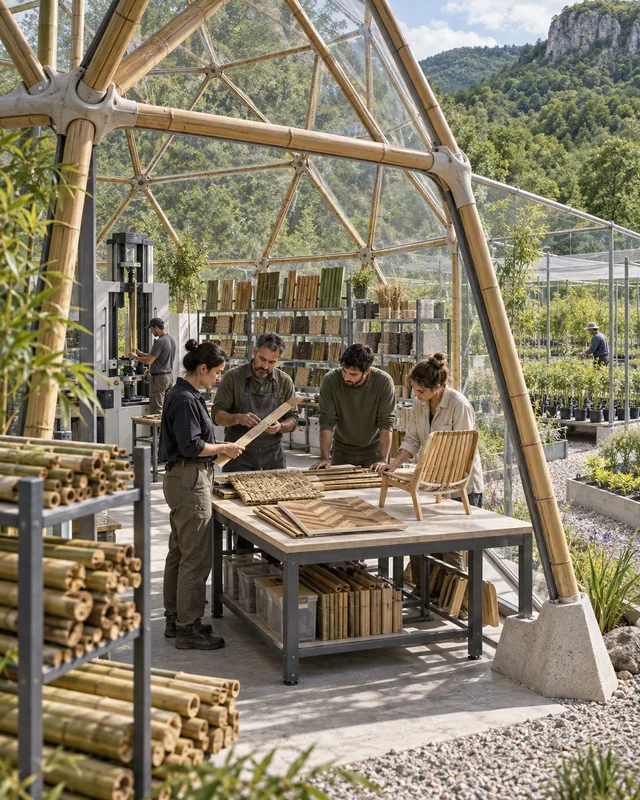
Bamboo is a proposed working branch of this vision. Suitable plots would test growing conditions, its contribution to ground stabilisation and biomass properties. Analysis determines which fractions can safely enter material development.
This opens a connected chain: nursery, cultivation, measurement, separation, fibre testing and a workshop. Furniture, flooring, panels and composites become directions for prototypes and testing. Production grows with the availability of clean feedstock, local skills and a real need for the product.
04 / From sample to use
Every material carries its history
Metal recovery, stabilisation and vitrification open further research questions. The usefulness of an output depends on purity, leaching, energy demand, emissions and performance in use. Some residues will still require controlled management.
ECOMULATOR directs attention to this whole journey: source, composition, separation and consequences. A local workshop could investigate construction components, filtration media or products made from clean bamboo, hemp and wood, with a clear record of what went into every sample.
05 / Local capacity
A centre that grows with the work
Bor and Majdanpek already have industrial experience and people who understand materials. The proposed bio-eco centre builds on this through water and soil laboratories, a nursery, repair and prototyping. Domes and other modules are added for the functions they need to serve.
A bamboo workshop, tool space, a craft school and a small open amphitheatre connect production with learning and public conversation. Borosilicate glass, bioplastics and geopolymer components can become subjects of material research. The centre's value remains in knowledge, equipment and local work.
Renewing the ground can grow into work that belongs to the place.
From vision to practice
Development, step by step.
- 01
Establish a baseline
Independently examine water, soil and process residues, connect them to the ground and keep the results publicly accessible.
- 02
Connect small trials
Test a water module, then selected living filters and material samples. Each trial has known inputs, outputs and a condition for stopping.
- 03
Develop local work
Choose with local people what shows benefit, can be maintained and has a safe application. Then expand capacity gradually.
Open to collaboration
Keep the capacity for renewal here
The invitation is to local specialists, researchers, craftspeople and those who know this ground. The first shared task could be a water sample, a trial plot or a material prototype with a clear purpose.
Let’s talkA development vision, open to further work and collaboration. The illustrations show possible spaces and functions, not completed facilities.