
Humanika · A vision of what could be
Regional Synergy
Connect places. Keep their choices open.
Regional Synergy is a vision of cooperation between Jadar, Bor and Majdanpek through knowledge, research and carefully verified material flows. Shared work begins with what can build each place's capacity: comparable measurements, accessible laboratories, training and people who understand both their own ground and the ground of others.
Explore the vision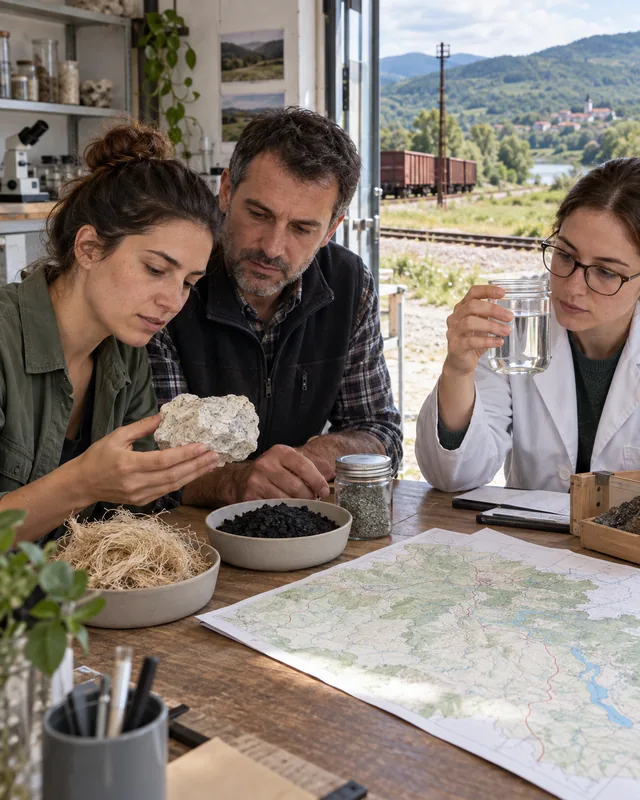
01 / Different places
Two landscapes can share a way of working
In Jadar, the focus is water, agricultural value, wetlands and research into selective separation. In Bor and Majdanpek, attention turns to mine water, tailings, biological trials and material development. Each place has its own needs, experience and boundaries.
Their connection can begin with shared questions: what enters a process, what comes out, what remains and who benefits? Experience from one landscape becomes useful to another, while decisions stay connected to the people who will live with their consequences.
02 / The first connection
Laboratories and people before large transfers
Sampling rules, labelled samples, accessible methods and comparable reports allow the same material to be discussed using the same evidence. Mobile testing, university collaboration and joint workshops can bring expertise closer to places that need it.
Training in water measurement, equipment maintenance, repair and material work remains useful even when a research direction fails. Local centres can share equipment, experience and specialists. The network grows through what people can do together, while each place keeps room to ask its own questions.
03 / Possible connections
Materials travel with their provenance
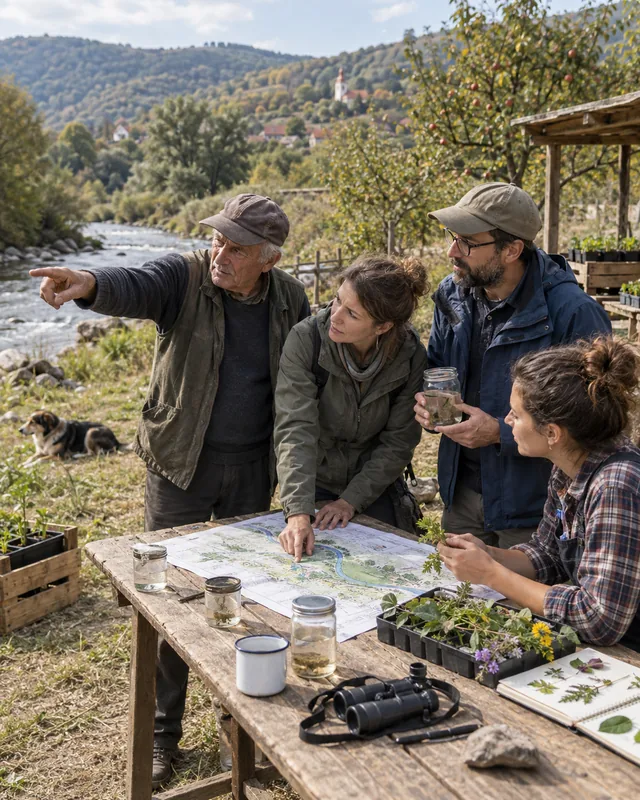
Verified clean biomass, wood, hemp and food-processing residues open questions about materials, filtration and energy. Zeolite and biochar can be studied for nutrient retention, while purified borate compounds and mineral recovery form separate laboratory research directions.
Each possibility is examined for composition, purity, benefit and what remains after use. Transport, energy, maintenance and the possibility of using a material closer to its source belong in the comparison. Sometimes the best regional decision is for knowledge to travel while a material stays where it already has a useful application.
04 / The whole journey
Value is visible on the return journey too
ECOMULATOR helps follow each proposed connection from source to consequence. A record connects the place and process of origin, composition, quantity, destination, responsibility and the route taken by residues. Clean, uncertain and hazardous streams remain separate. A potential product stays visible alongside the work needed to use it responsibly.
Cooperation can endure when each place understands the benefit, participates in decisions and can stop a flow that does not serve it. Laboratory testing and a small two-site trial provide a basis for that conversation. Regional value includes water, knowledge, local work and the capacity to maintain what has been developed together.
Connect knowledge first. Then test what is worth connecting through materials.
From vision to practice
Development, step by step.
- 01
Align the knowledge
Agree on sampling, record keeping and access to results. Connect existing local experience with the specialist support it needs.
- 02
Test one connection
Choose a possible flow, examine it in the laboratory, then in a small trial that can be stopped. Include transport, energy and returned residues.
- 03
Decide together
Compare the benefit with costs and other possibilities. Expand cooperation when it offers clear value to each place and preserves local decision-making.
Open to collaboration
Greater capacity, closer responsibility
Local centres, laboratories, universities and workshops can begin by sharing questions, methods and experience. One useful collaboration, with a result everyone understands, is enough to start a wider network.
Let’s talkA development vision, open to further work and collaboration. The illustrations show possible spaces and functions, not completed facilities.